Production in compliance with all the requirements of ISO 17034, and associated ISO Guides 31, 34 & 35.
What is a ROFA CRM?
Definition RM (ISO guide 30)
The difference lies in the level of reliability that can be given to them.
For CRMs, the metrological traceability (connection) of the certified values to the base units must be carried out ROFA only produces CRMs.
What should be the qualities of a reference material?
Be homogeneous: The differences in values observed between samples of the material must be within specified uncertainty limits.
Have a reference value: This involves characterizing each parameter. The most widespread method is based on the application of different independent analysis methods by several laboratories (Circular (FR) -.Round Robin (UK) tests).
Be stable: The material must maintain its reference value over time.
Nature of CRM ROFA
Petroleum products for calibrating analytical devices used in test laboratories around the world.
Products concerned
Gasoline / Diesel / Kerosene / Lubricants / Bio Carburant.
Presentation of the CRM
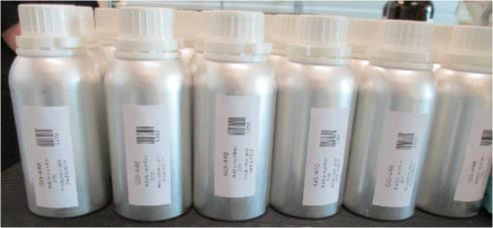
In the form of aluminum bottles in 250ml and 1000ml depending on the type of parameters.
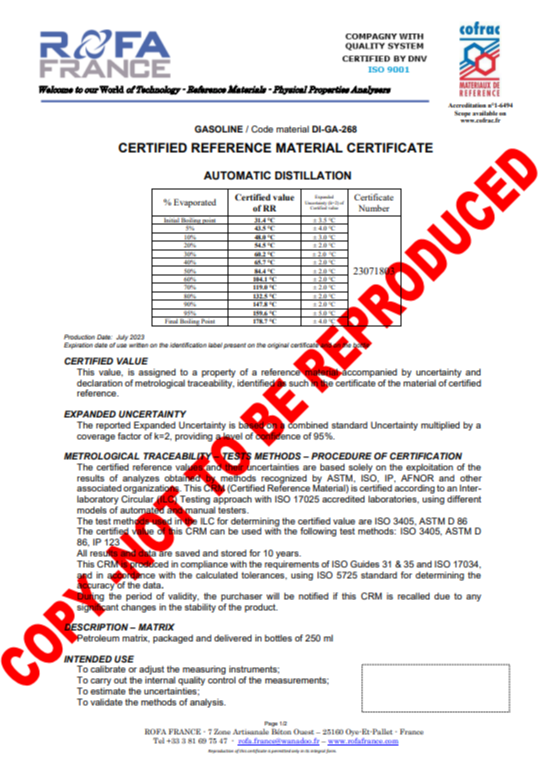
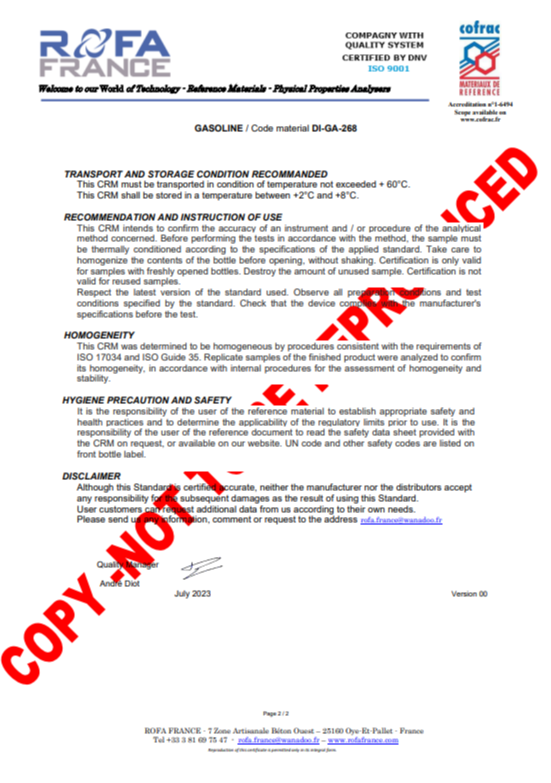
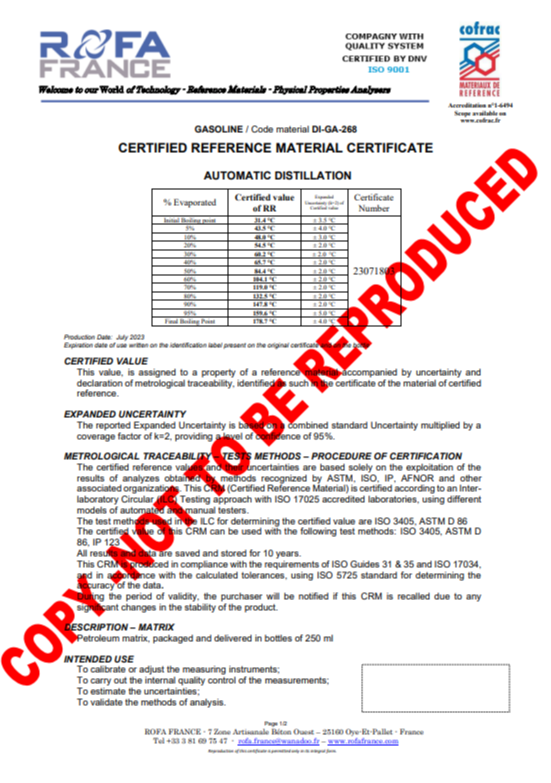
Supplied with a certificate including the values and uncertainties of the parameter concerned, and all the conditions of storage, conservation and use during the tests.
Processus of production
Fuels Supply
⬇︎
Homogenisation
⬇︎
Initiale Validation
⬇︎
Bottling
⬇︎
Labelling & Traceability
⬇︎
Homogeneity analysis, Circular tests, stability analysis after one month
⬇︎
Characterisation according standard ISO 5725-2
⬇︎
Edition of the Certificate
⬇︎
Stock & Sales (Labelling & Traceability)
⬇︎
Control of stability over time at a defined frequency
Fuels Supply
All products are from certified producers.
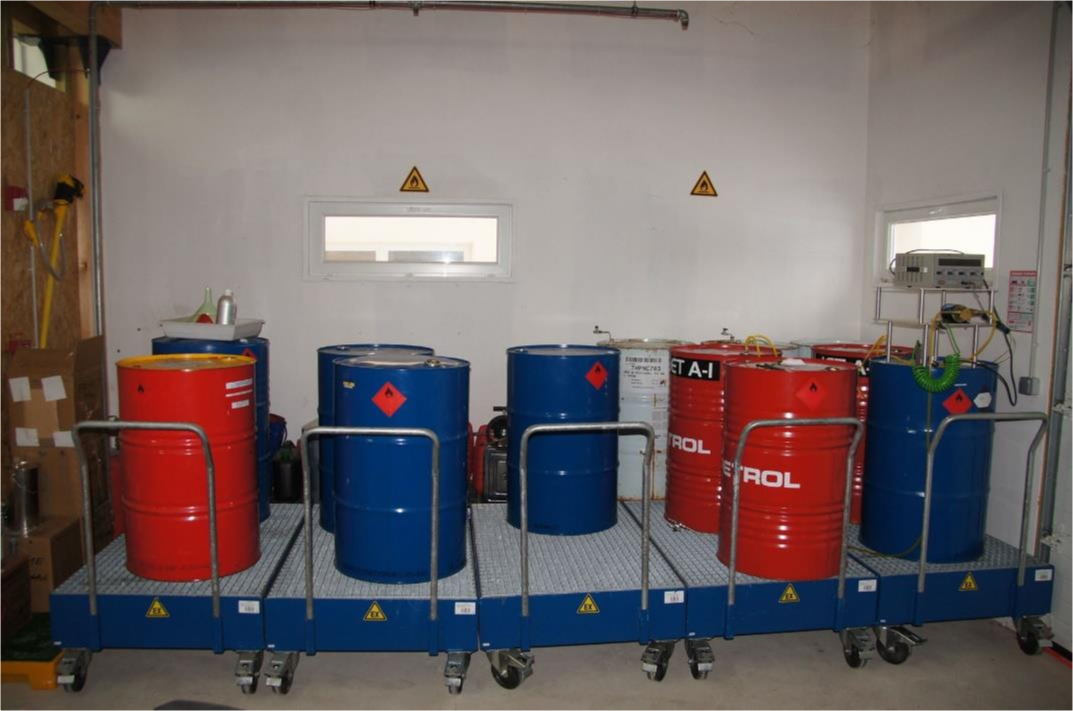
Deliveries are made in 200 liter or 100 liter drums depending on the type of product.
The barrels are delivered either directly by the producers,
Either taken by our services at the producers.
All products comply with current standards
Homogenisation
Homogenization is the first step in preparing fuel oils before analysis.
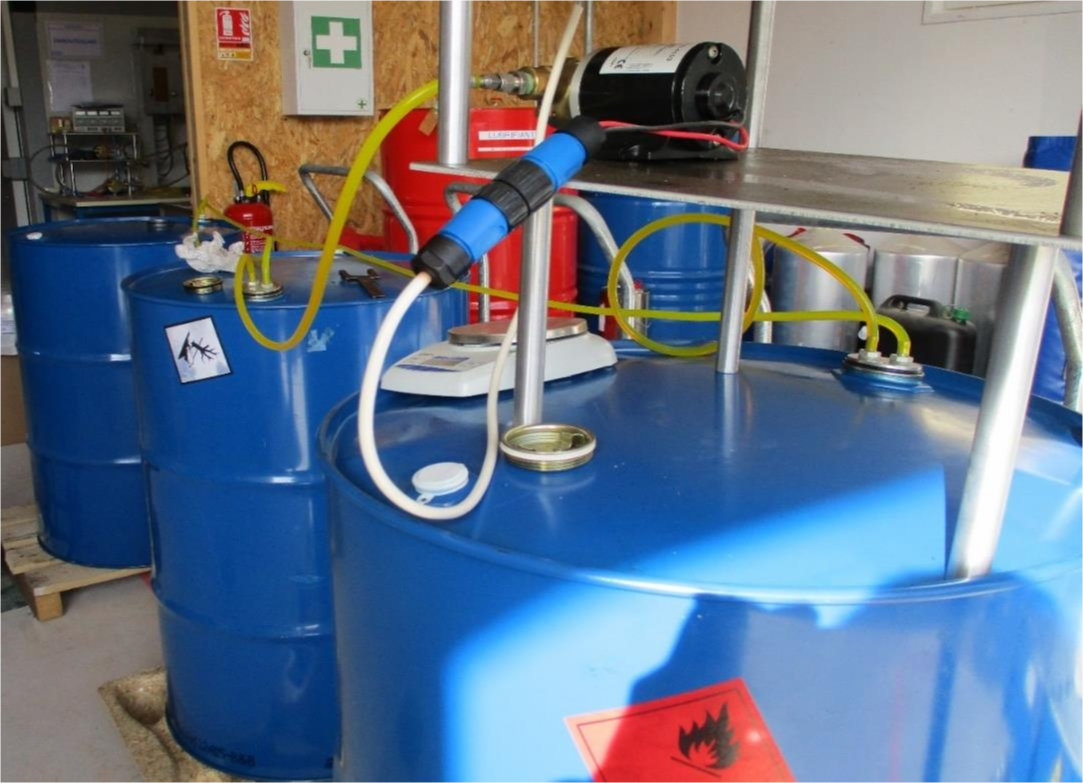
It takes place at our place of production, with a set of circulation pumps, in series, which transfers the contents of the drums from one to another.
The operation takes an average of 24 hours.
Initiale Validation
Before bottling, a product conformity check is made by sending samples to our referring laboratory.
On the basis of the results obtained, the decision will be made to bottle the barrels in 250ml bottles, or 1000ml depending on the nature of the parameters.
DIESEL
Density at 15 °C
Cloud Point
CFPP – Cold Filter Plugging Point
Pour Point
Automatic Distillation
Pensky Martens
Kinematic Viscosity +20°C
Kinematic Viscosity +40°C
Sulphur Content
Cetane Number
JET AVIATION
Density at 15°C
Freezing Point
Automatic Distillation
Sulphur of Mercaptans
Acidity
Abel Flash Point
Smoke Point
Kinematic Viscosity -20°C
TAG Flash Point
FIA Aromatics
Aniline Point
GASOLINE
Density at 15°C
Automatic Distillation (Unleaded)
Reid Vapour Pressure
Aromatic Content
Benzene Content
Motor Octane Number (Unleaded)
Research Octane Number (Unleaded)
LUBRICANT
Density at 15 °C
Cleveland Flash Point
Pensky Martens Flash Point
Pour Point
Kinematic Viscosity at +20°C
Kinematic Viscosity at +40°C
Kinematic Viscosity at +100°C
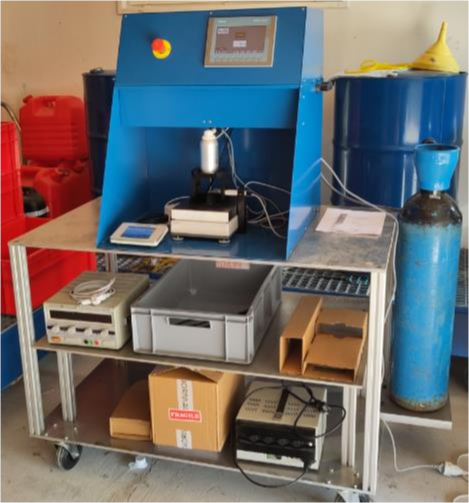
Bottling
The bottling operation is carried out after validation of the product. It is done continuously with all the barrels.
The bottling system with nitrogen pressurization, guarantees work in complete safety, and without loss of light products as would do a pumping system.
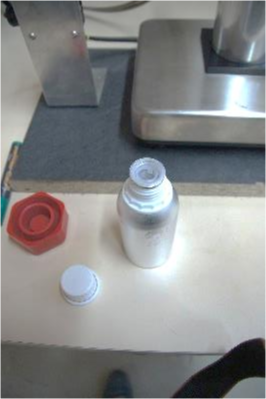
The empty bottle is placed on a calibrated balance, with COFRAC certificate, a mass corresponding to 250 ml is filled. The mass depends on the nature of the fuel.
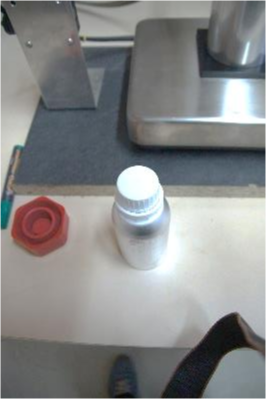
The bottle is closed with a Teflon cap and a stopper with safety stop. Once closed, it receives the corresponding label.
Labelling & Traceability
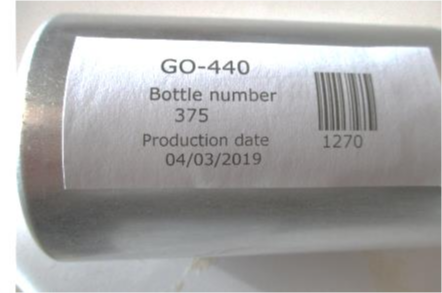
Once closed with a Teflon seal and a stopper with a safety stop, it receives the label with the product code, the bottle number and the production date. A bar code allows fast and traceable registration.
Homogeneity analysis, Circular tests, Stability analysis after one month
Homogeneity Analysis
The tests are done on some following critical parameters
DIESEL
Density
Cloud Point
JET AVIATION
Density
Freezing Point
GASOLINE
Density
Vapour Pressure
LUBRICANT
Density
Viscosity at 40°C
Round Robin Tests
The tests are done on all existing parameters in our catalog
Stability Analysis after one month
The tests are done on some following critical parameters
DIESEL
Density
Cloud Point
JET AVIATION
Density
Freezing Point
GASOLINE
Density
Vapour Pressure
LUBRICANT
Density
Viscosity at 40°C
Characterization according standard ISO 5725-2
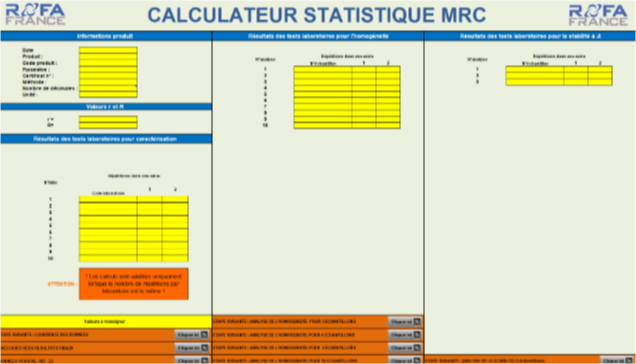
The calculator generates all the values that will appear on the certificate.
Control of stability over time at a defined frequency
Tests are carried out on the following critical parameters

Stock & Sales (labelling & traceability)
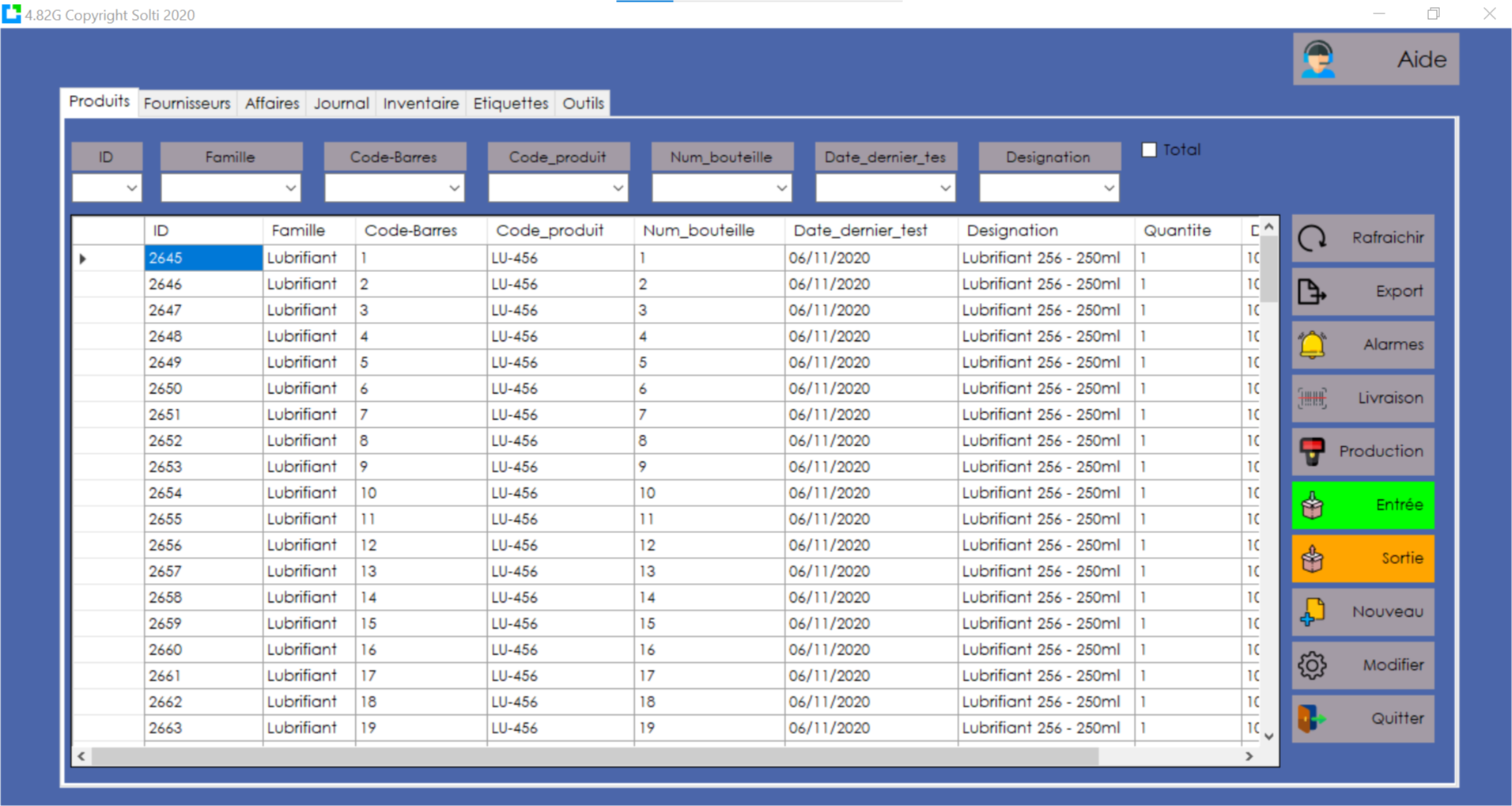
Application software, dedicated to our process, will generate the with use of bar code on the bottle, the document of stock output, with all the information’s on code product, bottle code number, parameter name and value, expiration date. Stock traceability is updated and accessible in real time. Name of the client is linked with the bottle code number for full traceability.
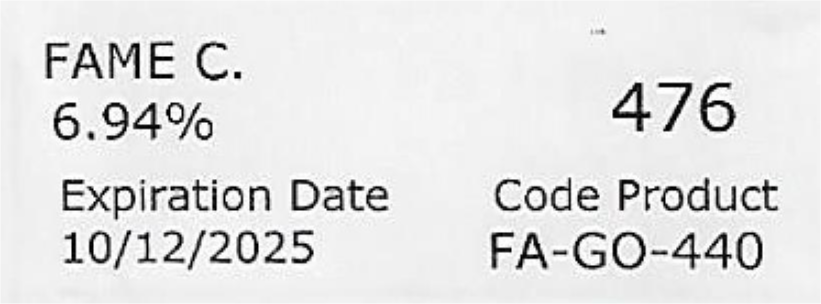
Example of labels edited in 3 exemplary.
One on the certificate
One on the bottle
One on the box
Homogeneity analysis, Circular tests, Stability analysis after one month
Homogeneity Analysis
The tests are done on some following critical parameters
DIESEL
Density
Cloud Point
JET AVIATION
Density
Freezing Point
GASOLINE
Density
Reid Vapour Pressure
LUBRICANT
Density
Viscosity at 40°C